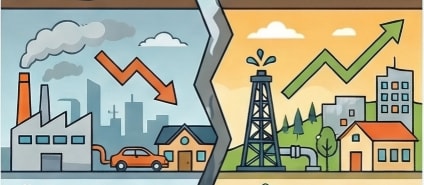

While a war thousands of miles away might feel disconnected from your local real estate market, the economic "chain reaction" is very real. Here is how oil prices ripple through the housing industry, according to NAR Chief Economist Lawrence Yun.
1. The Inflation-Mortgage Rate Connection
The most direct impact isn't at the gas pump—it’s in your monthly mortgage payment. Oil is a "core cost" for the entire economy. When oil prices spike, the cost of transporting goods and manufacturing products rises, fueling inflation.
Because the bond market (which influences mortgage rates) is highly sensitive to inflation, these spikes often push mortgage rates higher. As Lawrence Yun recently noted, even when affordability begins to improve, a sudden jump in oil prices can reverse that trend overnight by driving interest rates back up.
2. The "Indirect Tax" on Buyers
High oil prices act like an invisible tax. When a family is spending an extra $100–$200 a month on gasoline and heating, that is money that isn’t going toward a down payment or a monthly mortgage. This "squeeze" on disposable income reduces a buyer’s purchasing power, often forcing them to look at lower price points or hit the "pause" button on their search entirely.
3. Construction and the Cost of New Homes
It isn't just the cost of living that goes up; it’s the cost of building. Petroleum is a key ingredient in many building materials, including:
Asphalt shingles
PVC piping
Insulation
Paint and coatings
Furthermore, the cost of shipping lumber and steel to a job site increases with fuel prices. Builders often pass these costs on to the consumer, which can keep new home prices elevated even if demand cools.
4. The Regional Divide
Interestingly, the impact of oil isn't the same everywhere.
In "Energy-Consuming" Regions (like the Northeast and Midwest), high oil prices generally dampen the market as heating and commuting costs rise.
In "Energy-Producing" Regions (like Texas or North Dakota), high oil prices can actually boost the local economy, creating jobs and increasing housing demand.
The Bottom Line
Housing doesn't usually react to headlines—it reacts to interest rates. While geopolitical conflict creates a "wait and see" atmosphere, the real factor to watch is how long oil prices stay elevated. If they remain high, expect mortgage rates to stay "sticky," making professional guidance more important than ever.